The Insights Center features ideas, tools and resources on applying behavioral science to causes worth caring about. It includes the tools and thinking developed over nearly two decades of building behavior change campaigns and products. We hope they help you and your cause with the art and science of using behavior to spark real change.
GoStrengthening Support
for Stopping
the Schooltime Scroll
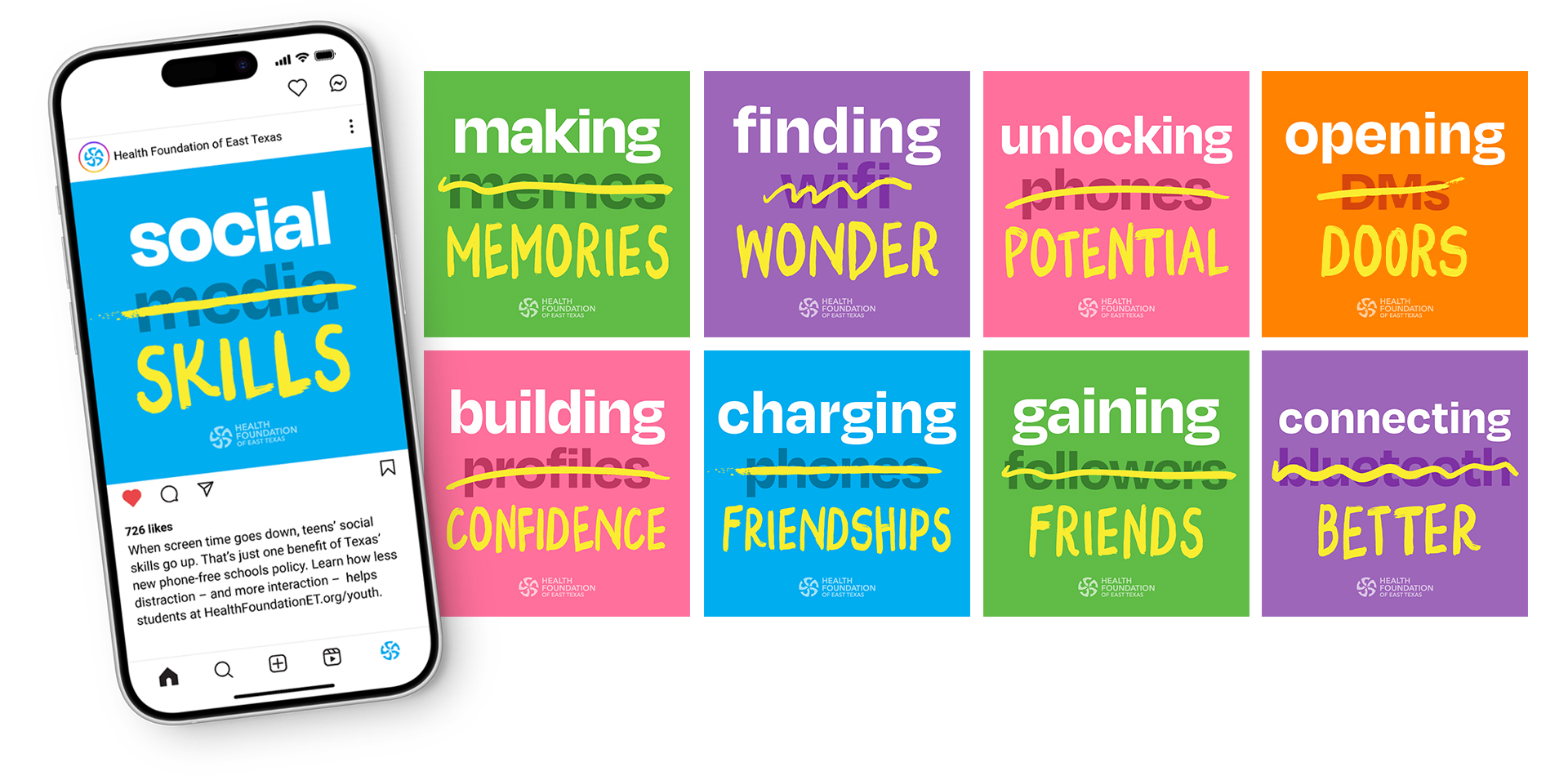
When the Texas Legislature passed a phone-free schools policy just a few months before the start of the school year, the Health Foundation of East Texas launched a campaign to bolster support among students, parents and teachers in Smith County. The campaign was part of a larger effort to co-create community support for youth digital wellness and resilience.
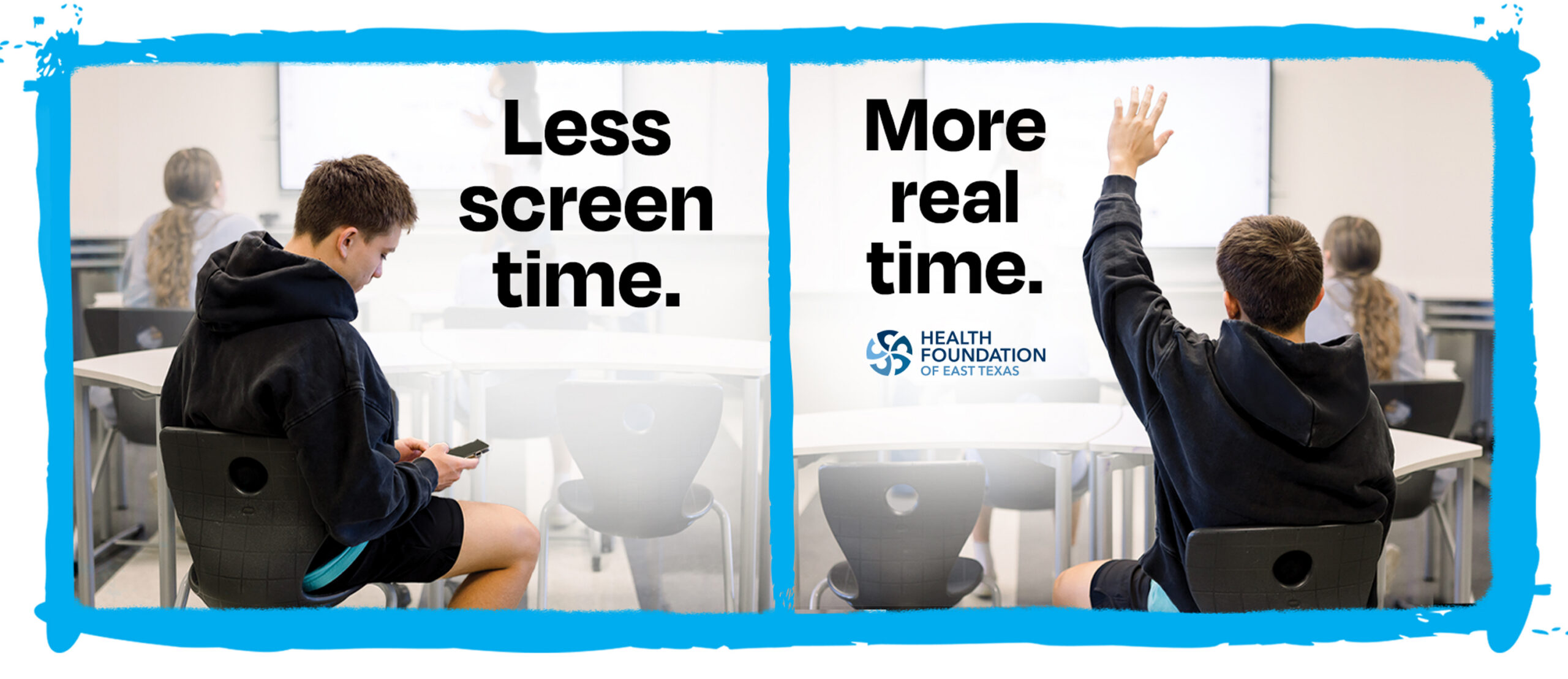
The Challenge. Smartphones are now part of daily life for 95% of teens and nearly half of children 12 and younger; 45% of teens report being online “almost constantly,” according to the Pew Research Center. However, emerging research points to many downsides of youth smartphone use, from depression and obesity to impacts on social skill development to shorter attention spans and decreased academic performance.
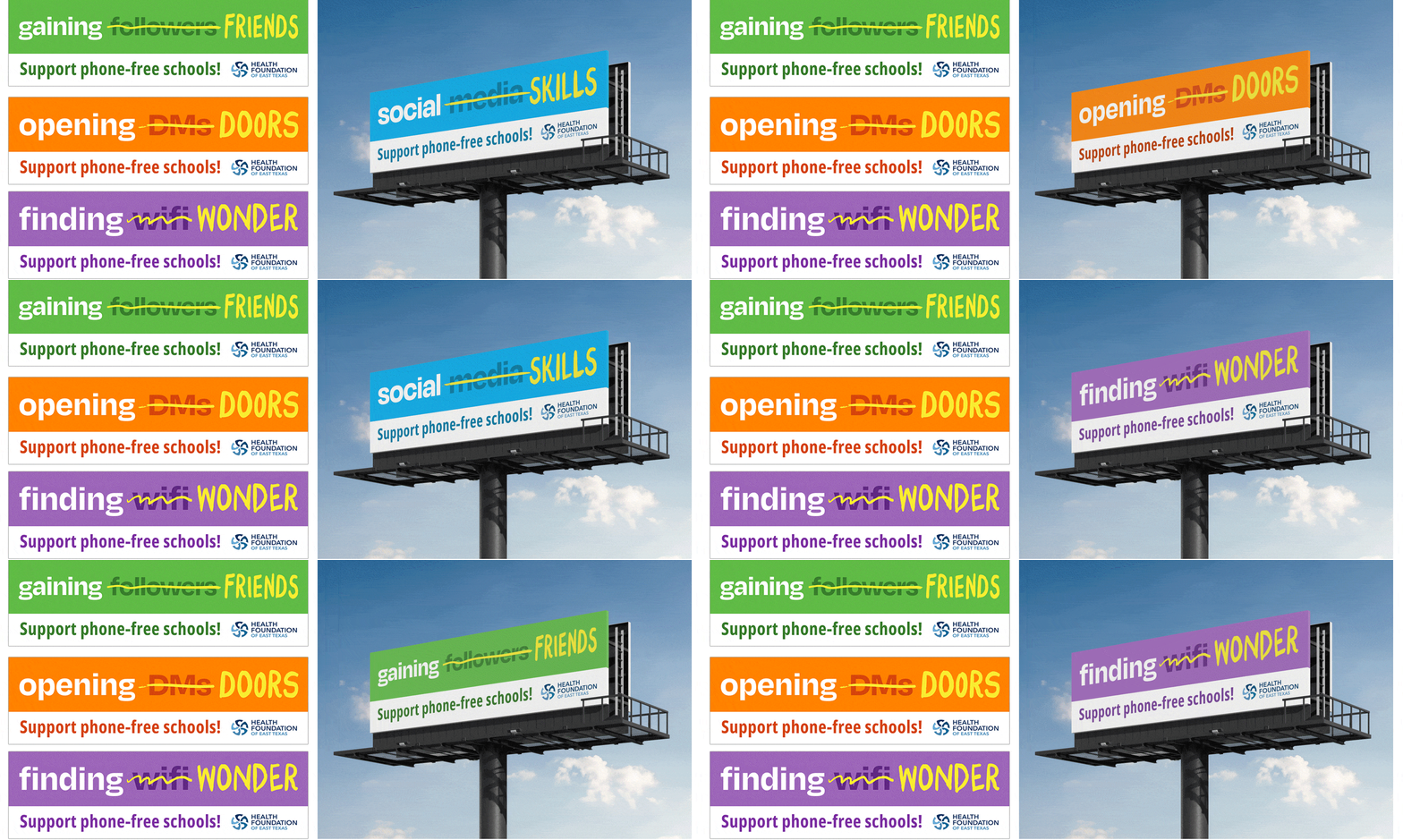
Our Approach. M4C kicked off with a rapid review of existing literature, including lessons learned from schools that already had implemented phone-free policies and key stakeholder interviews. We conducted a survey of local adults, with a focus on parents, to understand levels of support and to test creative. We then launched an omni-channel digital campaign across the community as well as an email campaign targeted to teachers.
Behavioral Insights. Our research showed that the first two to four weeks of policy implementation tend to be the hardest (for both teens and adults), so the campaign helped set the expectation for a “learning curve” to reduce uncertainty and immediate pushback. But most importantly, ads focused on the benefits reported by schools that have gone phone-free, including:
• Improved learning: more focus and engagement, better grades, and less cheating
• Improved social experience: more conversations and connection, less bullying
We also featured a video testimonial from a local principal whose school had implemented a successful bell-to-bell phone ban several years prior.
Results. While we weren’t able to do a formal evaluation, the Foundation has heard from school partners that policy implementation was smoother than expected. During a second semester school visit, teachers reported higher engagement in the classroom and students told us it’s a relief to talk to their friends again instead feeling awkward starting a conversation when everyone is staring at their phone. A key measure of success? School lunchrooms where students once quietly scrolled are ear-splittingly loud again.